Reimaging handcrafted heritage since 2004: Where Colour, Craft, and Culture Meet
From the bustling streets of Karachi to the ateliers of London and Berlin, our founder has always carried a love for handcrafted detail and colourful traditions. Growing up among textiles and rich patterns, she was inspired by the artistry woven into every object, and the stories passed down through generations.
On a visit home after years in the corporate world, she embraced her tradition, and discovered the women who had preserved the centuries-old tradition and family tradition of crafting the same footwear worn by Moghul kings and queens. These artisans, whose work spans over 400 years, create intricate embroidered footwear that celebrates and embraces both cultural heritage and handcraft.
This inspired the first Meher Kakalia collection: pretty ballerinas, flat & suede slingbacks, and slides for women, each a testament to patience, skill, and beauty.
Every piece begins in our ateliers, where technical specialists help translate the designs into handcrafted footwear and accessories. Master craftswomen then bring them to life, working with embellished leather uppers to create shoes and accessories that are timeless, luxurious, and full of history.
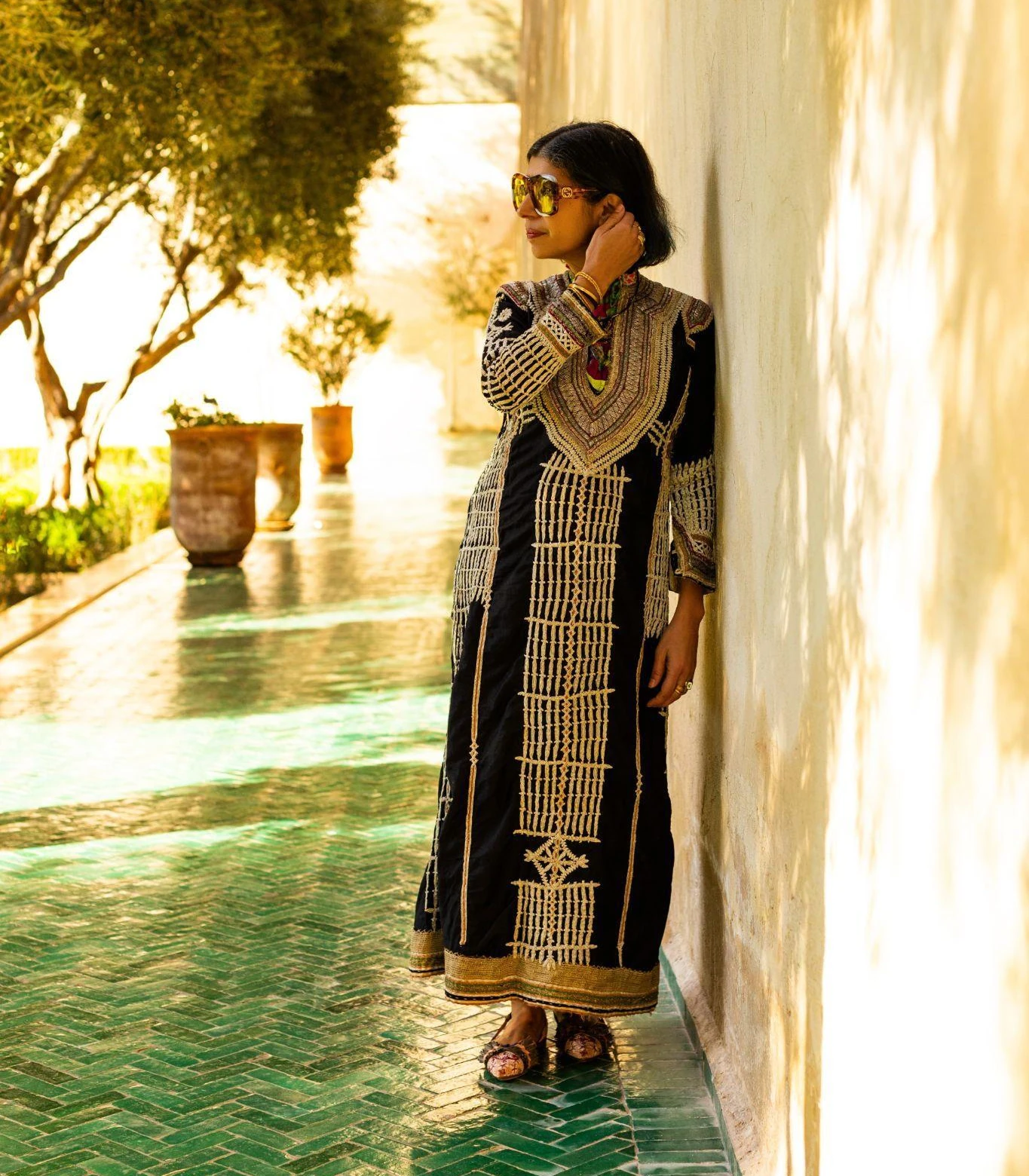
Every collection is a bridge between past and present, honouring cultural heritage while celebrating modern design, colour, and tradition.
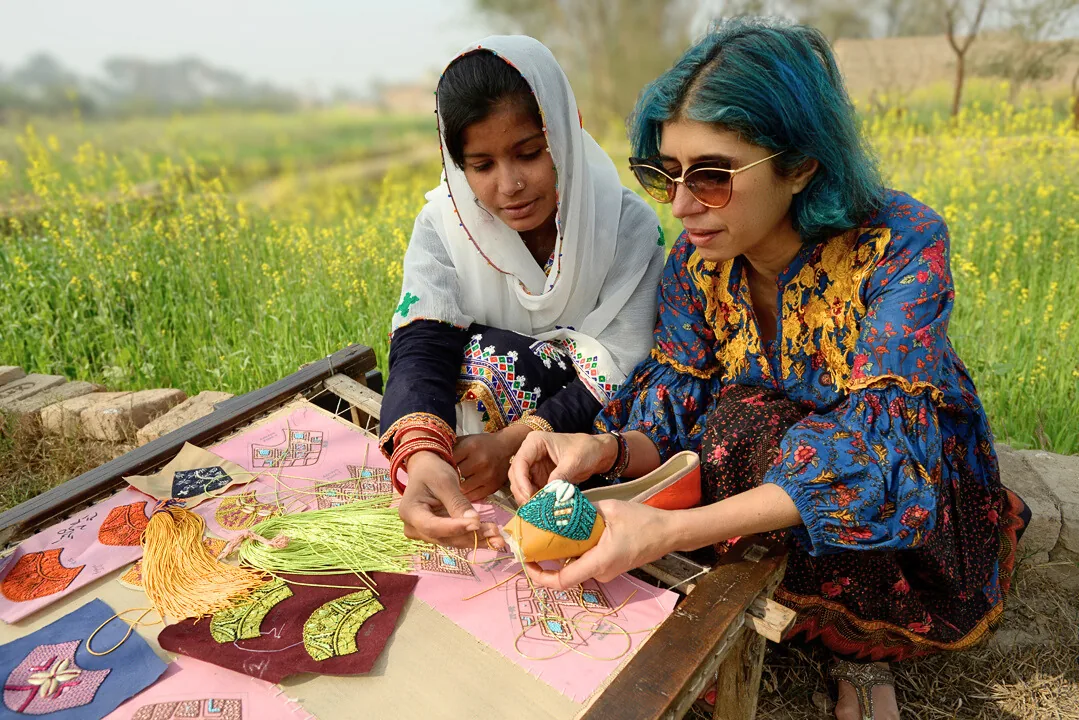
Most of our staff has worked with us from inception. Some of them may have had limited education while being very skilled in their own field. However, we are secretly delighted that, by opening their eyes to possibilities, they are putting their children through school and university. “Respect for people”, “appreciation of everyone’s cultures” has meant that different groups of people work harmoniously together.
Meher has been working with women embroiderers clipping and hooking beautiful coils onto different designs for the brand.
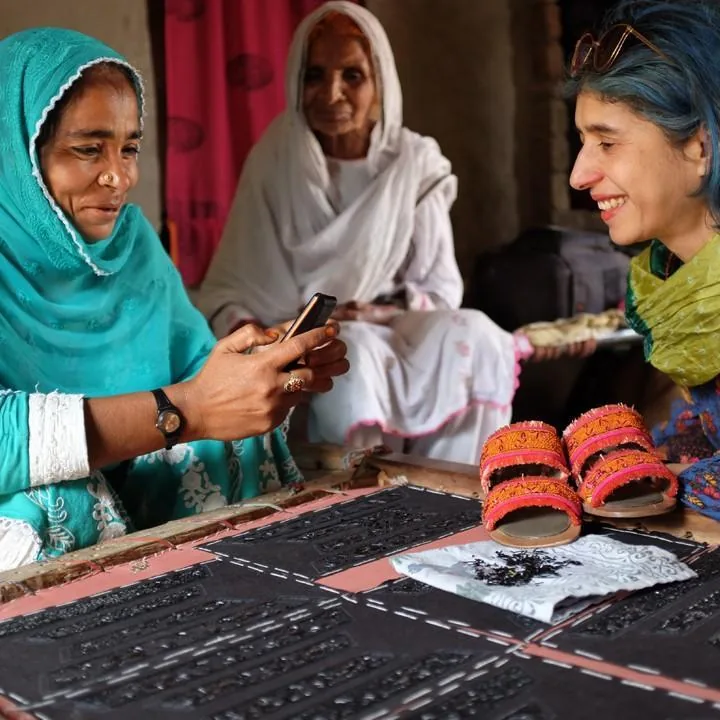
These ladies live quietly in their homes in distant villages and yet understand the work ethos we need. Their attention to detail and reliability in terms of deadlines makes it a total joy to work with them. Sometimes it takes a bit of coaxing to get them to agree to new ways of doing things but seeing the result they don’t look back.
Not only do they continue a beautiful craft but also manage to live their lives with an eye on the rest of the world.
A tool similar to a crochet needle to embroider in wool or silk.
Frame on which embroideries are made.
Fine coils in matt colour are snipped to size before being hooked on to the upper.
Wire coil placed to create boundaries and outlines which protect the embroidery.
Sparkling coils in colour are snipped to size and added as shine and detail in the embroidery.
Vegetable tanned (using natural herbs instead of chemicals to tan the leather) and used largely for soles only. The natural dyeing process takes longer, and our tannery uses traditional hand rolled drums to do this.
Sturdy skins, used only from the food chain and tanned in our own tanneries.
Sheep skin with hair. This is the original form of the skin so instead of removing the hair it is simply treated to remain and provide warmth and beauty to the wearer.
Luxurious and silky soft nappa made from Sheep skins. Only purchased when bought from the food chain.
The first stage is to create blue crust where the skins are cleaned and treated to last. The crust is then graded and arranged. Dyeing, where the skins are dipped into dye in drums or sprayed is the next step. The skins are then dried and finished with finishing agents.
Base for dapka embroidery.
These are either stacked leather or wood.
The area and height of the foot where you have an arch.
Lining which in our case is usually leather.
Any material or stitching on an upper to help it withstand the stresses met during manufacture, or during wear.
A reinforcement in the waist of a shoe. This to maintain curvature and support the curved area. It is located between the insole and the sole, usually attached to the insole, and normally made of leather, wood or steel.
The base of the shoe.
A component that reinforces the upper around the heel area of the foot to support the foot and provide shape retention. It is inserted between the lining and the outer soles to give support and shape.
A trim made from several leather strips and held by a loop which is often embroidered in our case.
The top of the shoe.
The component of an upper that covers the front half of the foot. If a shoe has a toe-cap, then the word vamp may refer to the toe cap and the component behind it.